

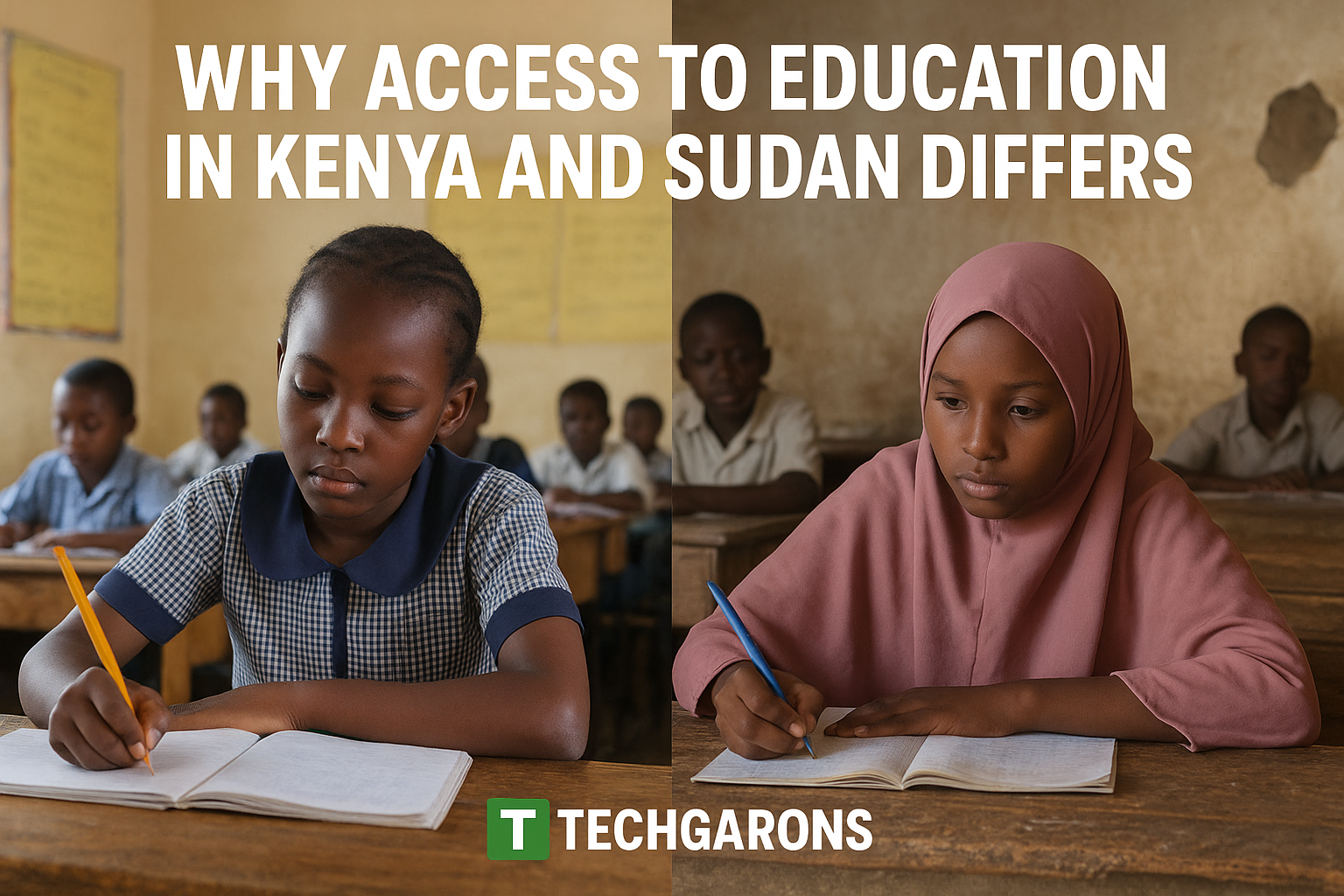
Introduction
Education is often described as the key to development. It shapes societies, creates opportunities, and reduces poverty. In Africa, access to education varies from country to country. Kenya and Sudan are two nations that share geographical proximity but show clear differences in education systems, policies, and accessibility.
This blog explores why access to education in Kenya and Sudan differs by analyzing historical, political, economic, social, and cultural factors. We will also compare enrollment rates, gender disparities, government policies, and challenges that influence education in both countries.
Education Overview in Kenya
Kenya has invested heavily in education since independence in 1963. The government views education as a path to economic development.
- Free Primary Education (FPE) was introduced in 2003.
- Free Day Secondary Education (FDSE) followed in 2008.
- The current system is the Competency-Based Curriculum (CBC).
Key facts:
- Literacy rate (2024 est.): ~82%.
- Primary enrollment: over 90%.
- Strong emphasis on technology integration in schools.
Education Overview in Sudan
Sudan’s education system has been deeply affected by war, political instability, and economic crises.
- Years of civil war and conflict in Darfur and other regions disrupted schooling.
- After the separation of South Sudan in 2011, Sudan lost oil revenue, reducing funds for education.
- Many schools lack infrastructure, trained teachers, and resources.
Key facts:
- Literacy rate (2024 est.): ~60%.
- Primary enrollment: ~70%.
- Rural and conflict-affected areas face severe inequalities.
Why Education Access Differs: Key Factors
1. Historical Background
- Kenya: Colonial education policies favored urban and missionary schools. After independence, the government expanded education nationwide.
- Sudan: Colonial policies prioritized elites. Post-independence instability limited reforms. Wars and political transitions further slowed progress.
2. Political Stability
- Kenya has had political challenges but maintained relative stability. Education policies continued even during election disputes.
- Sudan has faced coups, revolutions, and long civil wars. Instability diverted funds from education to defense.
3. Economic Resources
- Kenya’s economy is more diversified (agriculture, services, technology). More funds are allocated to education.
- Sudan’s economy depends heavily on agriculture and oil. After South Sudan’s separation, revenue fell sharply, shrinking education budgets.
4. Government Policies
- Kenya’s policies emphasize universal education and equity.
- Sudan’s policies often suffer from weak implementation due to limited resources and corruption.
5. Infrastructure and Teachers
- Kenya: More schools, better teacher training programs. Still crowded classrooms.
- Sudan: Many schools destroyed during conflicts. Severe teacher shortages in rural areas.
6. Gender Equality
- Kenya has reduced gender gaps, especially in primary schools.
- Sudan struggles with cultural norms and early marriage, limiting girls’ education.
7. International Aid and Partnerships
- Kenya receives significant aid from the World Bank, UNICEF, and NGOs.
- Sudan receives less aid due to sanctions, political instability, and donor mistrust.
📊 Comparison Table: Kenya vs. Sudan in Education
| Factor | Kenya | Sudan |
|---|---|---|
| Literacy Rate | ~82% | ~60% |
| Primary Enrollment | 90%+ | ~70% |
| Government Investment | High (FPE + FDSE) | Low (conflict reduces spending) |
| Political Stability | Relatively stable | Unstable, frequent conflicts |
| Gender Gap | Narrowing, strong focus on girls | Wide, many girls excluded |
| Teacher Availability | Improving, but overcrowded classrooms | Severe shortages in rural/conflict areas |
| Donor Support | Strong partnerships | Limited due to instability |
Challenges Facing Education in Kenya
- Overcrowded classrooms.
- High teacher-student ratios.
- Limited access in remote, pastoralist regions.
- Rising unemployment among graduates.
Challenges Facing Education in Sudan
- Destroyed schools in conflict zones.
- Teacher shortages and low salaries.
- High dropout rates, especially among girls.
- Limited access to learning materials and technology.
Opportunities for Improvement
In Kenya:
- Expand digital learning platforms.
- Address unemployment through vocational training.
- Increase funding for special needs education.
In Sudan:
- International partnerships to rebuild schools.
- Policies to support girls’ education.
- Peacebuilding to stabilize regions and restore schools.
Conclusion
Access to education in Kenya and Sudan differs due to a mix of history, politics, economics, and social structures. Kenya has achieved higher literacy rates and enrollment because of government commitment, stability, and strong donor support. Sudan, meanwhile, struggles with instability, conflict, and underfunding, which limit progress.
For Africa to prosper, both nations must ensure inclusive, quality education. While Kenya provides a model of steady investment, Sudan requires urgent reforms and international support. Education is not only a right but also the foundation of peace and development.
✅ FAQs
1. Why is education better in Kenya than Sudan?
Kenya has invested more in universal education, while Sudan faces challenges from wars, instability, and low funding.
2. What are the main challenges in Sudan’s education system?
Conflict, poor infrastructure, lack of teachers, and gender inequality.
3. How has Kenya improved access to education?
By introducing Free Primary and Secondary Education, and adopting a Competency-Based Curriculum.
4. What role does gender play in education access?
Kenya has narrowed gender gaps, but Sudan still struggles due to cultural norms and early marriages.
5. Can Sudan learn from Kenya’s education model?
Yes. Sudan can adopt policies for free basic education, gender equality, and international partnerships.