
Introduction
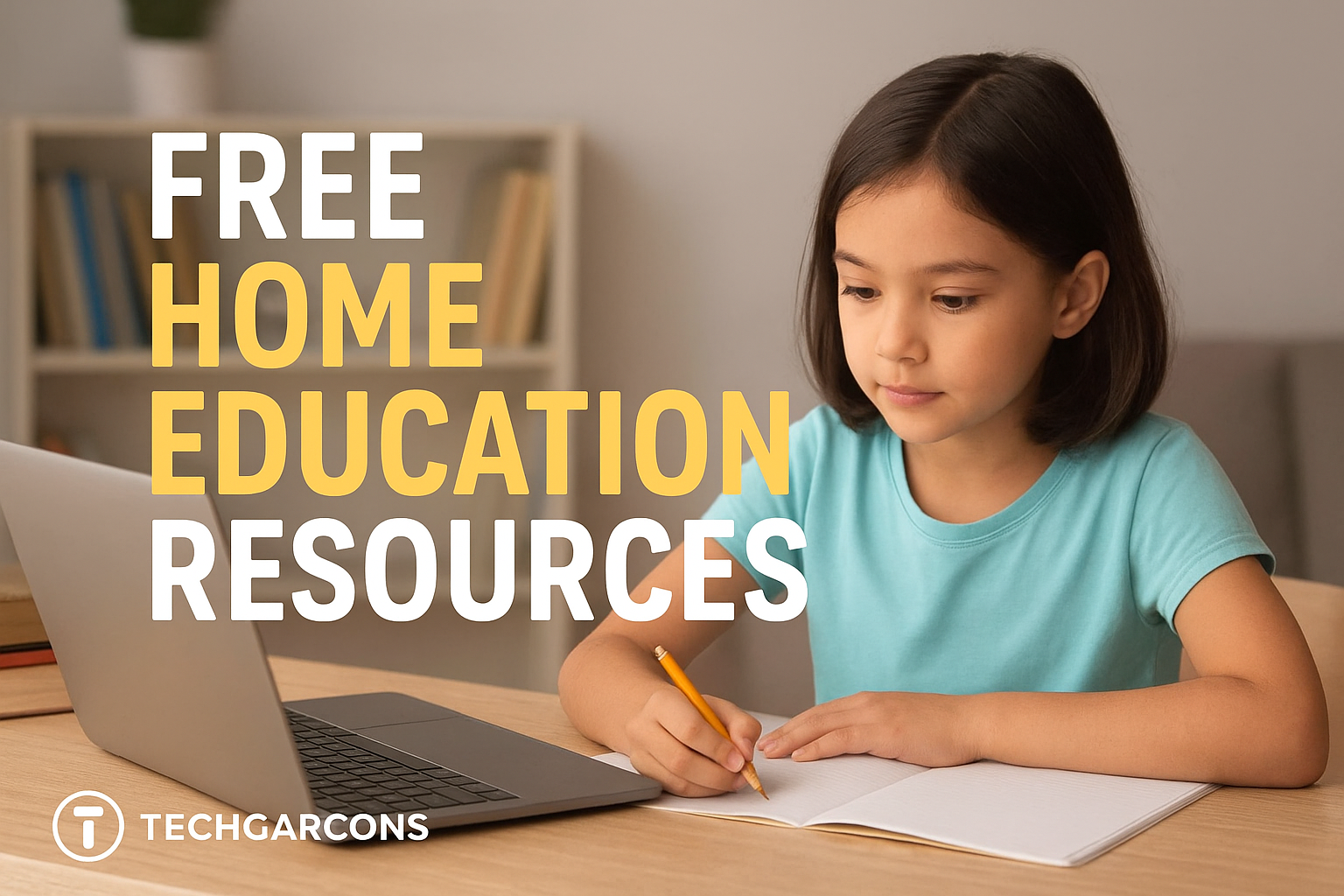
Home education, also called homeschooling, has been practiced for centuries. Before the rise of public schools in the 19th century, most children learned at home or within small community groups. In 2025, this tradition is being revived, with millions of families worldwide turning to home education due to rising tuition fees, flexible work lifestyles, and the accessibility of free online education resources
The internet has made it possible to access top-quality learning for free, covering everything from preschool basics to advanced university courses. In this guide, we’ll provide a complete breakdown of free home education resources, subject-by-subject, with tables, FAQs, and practical tips for parents.
Why Parents Choose Free Home Education Resources
| Reason | Benefit | Example |
|---|---|---|
| Cost Saving | Avoid expensive tuition fees | Free platforms like Khan Academy |
| Flexibility | Learn anytime, anywhere | Recorded lectures on Coursera |
| Customization | Tailor learning to child’s needs | Special needs & gifted education |
| Safety & Values | Control learning environment | Faith-based or value-based learning |
| Global Access | Learn from world-class institutions | MIT OpenCourseWare |
Core Academic Subjects with Free Resources
1. Mathematics
- Khan Academy – step-by-step lessons from arithmetic to calculus.
- Prodigy Math Game – gamified math for elementary students.
- NRICH – advanced problem-solving activities.
| Age Group | Resource | Notes |
|---|---|---|
| Primary | Prodigy, SplashLearn | Interactive games |
| Secondary | Khan Academy, Math is Fun | Practice worksheets |
| College | OpenStax, Brilliant (free section) | Higher-level learning |
2. Science
- NASA for Students – space and STEM activities.
- PHET Interactive Simulations – free online science experiment tools from Colorado University.
- CrashCourse Science (YouTube) – engaging animated lessons.
| Science Branch | Free Resource | Format |
|---|---|---|
| Physics | PhET, Khan Academy | Simulations + lectures |
| Chemistry | ChemCollective, CrashCourse | Labs & videos |
| Biology | HHMI Biointeractive, National Geographic | Articles & activities |
3. English & Literature
- Project Gutenberg – 70,000+ free ebooks.
- Grammarly Free – grammar assistance.
- SparkNotes – summaries of classic literature.
| Focus Area | Free Resource |
|---|---|
| Reading | Storynory (audiobooks for kids) |
| Writing | Grammarly, Purdue OWL |
| Literature | Project Gutenberg, LibriVox (audiobooks) |
4. History & Social Studies
- Smithsonian Learning Lab.
- BBC History for Kids.
- TeachingHistory.org.
5. Coding & Technology
- Code.org – beginner coding games.
- Scratch (MIT) – block coding for kids.
- W3Schools – free web development tutorials.
| Level | Resource | Skills Learned |
|---|---|---|
| Beginner | Scratch, Code.org | Basics of coding |
| Intermediate | FreeCodeCamp | Web development |
| Advanced | MIT OpenCourseWare | Computer Science |
6. Arts & Creativity
- Google Arts & Culture – virtual museum tours.
- Drawspace – free drawing tutorials.
- MusicTheory.net – music lessons.
7. Languages
- Duolingo – gamified language app.
- BBC Languages (Archived) – free cultural materials.
- Memrise (Free Version) – flashcards.
8. Life Skills & Personal Development
- Mindfulness for Teens – free guides.
- Financial Literacy for Youth (Practical Money Skills).
- Ted-Ed – motivational talks for personal growth.
9. Physical Education (PE)
Health and fitness training is also possible at home without any cost:
- GoNoodle (Free Activities) – for kids.
- YouTube PE Teachers (like Joe Wicks).
- Yoga for Kids Apps.
| Age Group | Free PE Resource | Activity |
|---|---|---|
| Kids | GoNoodle, Cosmic Kids Yoga | Dance & Yoga |
| Teens | Fitness Blender (YouTube) | Workouts |
| Adults | Nike Training App (free version) | Strength & cardio |
10. Religious & Ethical Education
For families who want value-based or faith-based education:
- Bible Gateway (Free Online Bible).
- Islamic Online University Free Resources.
- Bhagavad Gita Free eBooks.
Free Home Education Apps & YouTube Channels
| Platform | Best For | Link |
|---|---|---|
| CrashCourse (YouTube) | Science, History, Literature | Free video lessons |
| National Geographic Kids YouTube | Geography & Nature | Fun videos |
| Khan Academy Kids App | Preschool–Primary | iOS/Android |
| Duolingo App | Languages | iOS/Android |
Weekly Homeschool Plan (Template Table)
| Day | Morning (Core) | Afternoon (Creative) | Evening (Self-Learning) |
|---|---|---|---|
| Monday | Math (Khan Academy) | Drawing (Drawspace) | Reading (Project Gutenberg) |
| Tuesday | Science (PhET Sims) | Coding (Scratch) | Duolingo Language |
| Wednesday | English Writing | PE (GoNoodle) | History Video |
| Thursday | Math Practice | Music (MusicTheory.net) | Free Reading |
| Friday | Science Lab Activity | Art | Family Discussion |
| Saturday | Review & Quizzes | Creative Projects | Life Skills |
| Sunday | Rest & Reflection | Optional Activities | Journaling |
Free vs Paid Home Education Resources
| Feature | Free Resources | Paid Resources |
|---|---|---|
| Cost | Free | Expensive |
| Accessibility | Global | Sometimes restricted |
| Quality | High (but variable) | Usually structured |
| Certification | Limited | Often included |
| Examples | Khan Academy, Duolingo | Time4Learning, Outschool |
Challenges of Using Free Resources
- Lack of certification in some regions.
- Requires strong parental involvement.
- Not always aligned with local curriculum.
- Possible screen-time overload.
- Possible screen-time overload.
FAQs
Q1: Can homeschooling be done entirely with free resources?
Yes, many families rely solely on free resources successfully.
Q2: Which countries allow homeschooling?
USA, UK, Canada, Pakistan, India, and many others (check local laws).
Q3: Do free resources cover exam prep?
Yes. Platforms like BBC Bitesize help with GCSEs, and Khan Academy helps with SAT.
Q4: What about socialization for homeschooled kids?
Caregivers can create opportunities for teamwork, join local sports programs, and connect through online groups.
Q5: Are there offline free resources?
Yes. OpenStax textbooks and Khan Academy downloads are offline-friendly.
Q6: Do universities accept homeschooled students?
Yes, if students provide exam results or portfolios.
Q7: Can children with special needs benefit from free resources?
Yes, many free resources provide adaptive learning tools.
Q8: How much daily time is needed for home education?
2–4 hours for younger kids, 4–6 for older students.
Q9: How can parents track progress?
Use free tracking apps like Google Sheets or printable planners.
Q10: Are free resources safe?
Yes, but parents should monitor screen time and verify credible sources.
Conclusion
Free home education resources are revolutionizing learning in 2025. Parents now have access to a wealth of materials—whether it’s Khan Academy’s math lessons, OpenStax’s free college textbooks, or Duolingo’s fun language learning app.
The secret to success is:
- Structure learning with a weekly plan.
- Mix core subjects with creative & life skills.
- Stay consistent and monitor progress.
By using these tools wisely, you can provide your child with a world-class education at home—without spending a penny.
For more structured alternatives, explore our guide on Supplemental Educational Services.

There are actually a variety of particulars like that to take into consideration. That could be a great point to carry up. I supply the ideas above as basic inspiration however clearly there are questions just like the one you bring up where the most important thing might be working in honest good faith. I don?t know if best practices have emerged round things like that, however I’m positive that your job is clearly identified as a fair game. Both boys and girls feel the influence of just a second’s pleasure, for the rest of their lives.
Just tried my luck at Netwin. Not bad, got a few small wins. Seems legit so far. Check it out at: netwin